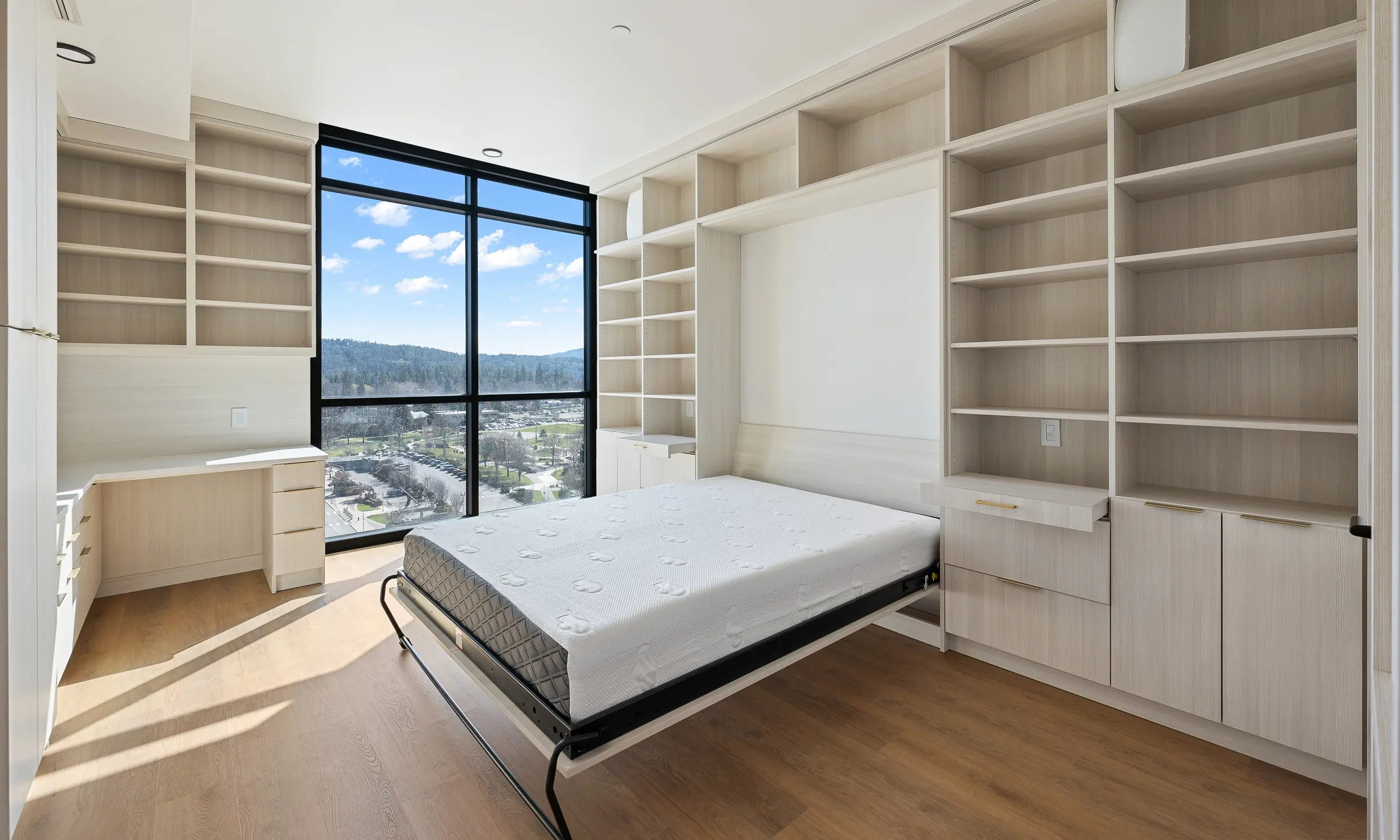
Rumor has it that William Murphy first invented the Murphy bed in the early 1900’s. Apparently, he was ever eager to woo a local opera singer. However, his one room apartment allowed no space for a parlor. It was customary at the time to never entertain a woman in your bedroom and so William sneakily designed the ever-popular “disappearing bed” in order to entertain, as well as potentially woo. This funny history, though not overly respectable speaks to the functionality of the Murphy bed.
Murphy beds can be used in a variety of settings: spare beds in a vacation home, extra sleeping space in a game room or office or, as in Williams case, in small living spaces. The selling point with the Murphy bed is its multi-functionality. It allows for living and sleeping to occur in the same space, without having to monopolize space. Murphy beds prove to be extremely practical in a number of scenarios.
Offices or playrooms can be excellent spaces for a Murphy bed. Unless guests are constantly pouring through your front door, having a guest room in the house can leave a perfectly good room untouched all year. A Murphy bed allows for a completely functional space to easily double as a guest room when need be.
With the ever-growing demand of housing in cities, condos and studio apartments are becoming the standard of living. The downside of these spaces are their limits on space. Providing adequate room for living as well as sleeping space can be tricky, however a Murphy bed can effectively eliminate this problem. A Murphy bed allows for quick transition between a living space and bedroom without the hassle of unmaking or folding up your bed each morning.
Murphy beds provide an undeniable level of practicality and function when planning the layout of a new room, studio, office or hobby room.